In the world of solar energy, understanding the difference between PWM and MPPT solar controllers is vital for system efficiency. According to solar energy expert Dr. Emily Carter, "Choosing the right solar controller is crucial for maximizing energy generation." With evolving technology, solar controllers vary significantly in their operational mechanisms and efficiencies.
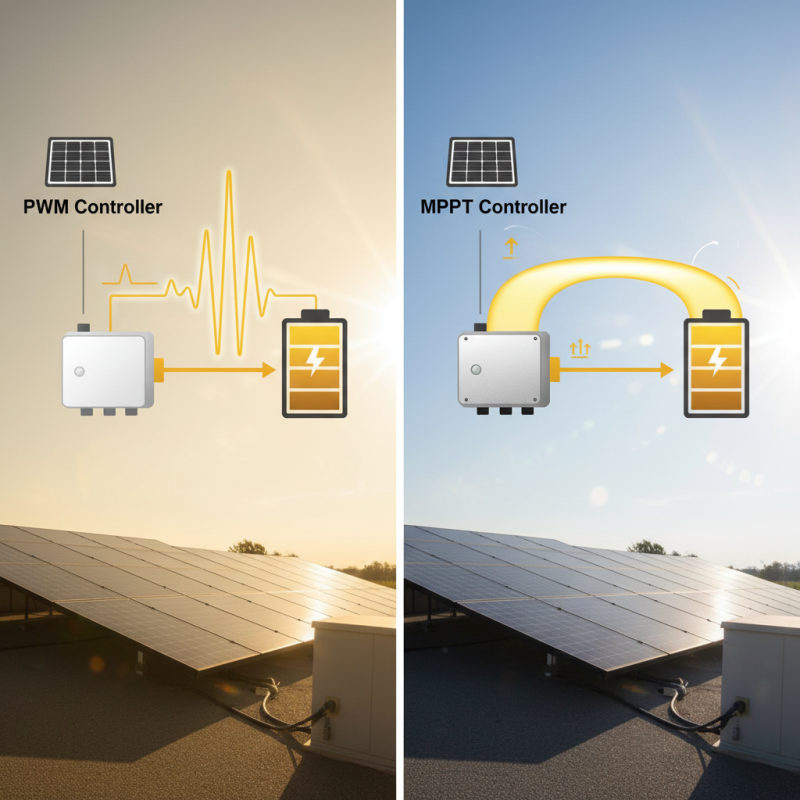
PWM, or Pulse Width Modulation, controllers act like a switch, modulating the power flow. They are simpler and often less expensive. However, they may not fully optimize power output in variable sunlight conditions. Conversely, MPPT, or Maximum Power Point Tracking, controllers are more sophisticated. They adjust the voltage and current to extract the most energy from solar panels.
Many users ponder what is the difference between PWM and MPPT solar controllers? While PWM may suffice for small systems, MPPT tends to excel in larger setups. It's essential to weigh the specific needs of your solar project to make an informed decision. Both technologies have their merits, and understanding these nuances can impact energy efficiency significantly.
Overview of Solar Charge Controllers
Solar charge controllers are essential components in solar energy systems. They manage the flow of electricity from solar panels to batteries. This ensures safe charging and prevents battery damage. There are different types of solar charge controllers, each with its unique characteristics and functionalities.
Pulse Width Modulation (PWM) controllers are known for their simplicity and cost-effectiveness. They work by rapidly switching the power supply on and off. This method allows for a controlled charging process. However, PWM controllers can be less efficient in producing maximum power from solar panels.
Maximum Power Point Tracking (MPPT) controllers, on the other hand, optimize the energy harvested from the panels. They adjust the electrical load to find the best operating voltage and current combination. While more complex, MPPT controllers offer higher efficiency, especially in varying sunlight conditions.
Understanding these differences helps users choose the right controller for their needs. PWM controllers may suffice for small systems. In contrast, larger setups might benefit from the advanced capabilities of MPPT controllers. Ultimately, the choice can greatly influence the overall efficiency of a solar energy system.
Understanding PWM (Pulse Width Modulation) Technology
Pulse Width Modulation (PWM) technology is widely used in solar controllers to efficiently manage energy from solar panels. PWM regulates voltage and current by varying the width of the pulses in a signal. This method is effective in maintaining the battery's charge and preventing overcharging. According to a study by the National Renewable Energy Laboratory, PWM can improve the overall efficiency of solar systems by up to 20%, making it a reliable choice for many small-scale solar applications.
However, some drawbacks exist with PWM technology. One issue is its limited performance in low-light conditions. When sunlight diminishes, PWM may fail to optimize the energy harvesting process. A report from SolarPower Europe highlights that while PWM controllers are good for smaller systems, they do not maximize power generation like their counterparts, the MPPT controllers do. This difference is critical, especially for larger solar installations. Users should consider these factors before choosing a solar controller, as the decision impacts the system's efficiency and longevity.
Additionally, PWM systems require a more traditional battery setup, which may not be suitable for advanced storage technologies. For instance, lithium-based batteries and certain smart batteries may not work optimally with PWM controllers. This mismatch can lead to performance issues, reducing the expected return on investment. It's essential for users to evaluate their specific energy needs and technologies before selecting the right controller.
Exploring MPPT (Maximum Power Point Tracking) Functionality
MPPT, or Maximum Power Point Tracking, is a technology used in solar controllers to optimize energy output. It constantly assesses the solar panel’s voltage and current to find the most efficient operating point. This tracking maximizes the energy harvested from solar panels, especially under varying sunlight conditions.
To explain further, MPPT controllers adjust their operating voltage to ensure the solar system produces the maximum possible power. By doing so, they can often increase energy capture by 20-30% compared to other methods. A well-designed MPPT system can adapt to shadowing, temperature changes, and other factors. However, not every setup requires an MPPT controller. For smaller systems with limited budget constraints, a PWM controller might suffice.
Still, selecting the right technology demands careful thought. Are the panels large enough to justify the investment? Would the additional efficiency pay off in the long run? Understanding these nuances is key. With solar energy, a different approach may not always yield the best results for every user.
Key Differences Between PWM and MPPT Controllers
When choosing between PWM and MPPT solar controllers, understanding their key differences is essential. PWM (Pulse Width Modulation) controllers are simpler and typically less expensive. They work by reducing the voltage from solar panels to match battery levels. This process can lead to energy loss if the solar input is higher than the battery voltage, affecting efficiency. Generally, PWM units are suitable for smaller systems where budget constraints are a priority.
On the other hand, MPPT (Maximum Power Point Tracking) controllers are more advanced. They optimize the power output from the solar panels by adjusting the operating parameters in real-time. This allows them to capture more sunlight, especially in fluctuating weather conditions. Although MPPT controllers are pricier, they can significantly increase energy harvest in large systems.
**Tips:** Consider your system size before making a decision. Smaller setups may benefit from PWM in cost-effectiveness. However, investing in MPPT is wise for larger installations, as the energy gain often justifies the cost. Remember, the right choice can enhance overall performance and energy savings in the long run.
Difference Between PWM and MPPT Solar Controllers
Choosing the Right Solar Controller for Your System
When choosing a solar controller, understanding the functionality of PWM and MPPT types is essential. PWM, or Pulse Width Modulation, is simpler and often cheaper. It works by reducing the voltage to match battery levels. This means it’s suitable for smaller systems. However, its efficiency is lower in cloudy conditions. MPPT, or Maximum Power Point Tracking, optimizes voltage and current. It's more efficient under varying sunlight. This means it performs better in diverse weather conditions.
Evaluating your system's needs is crucial. Consider the size, type of solar panels, and your energy requirements. If you have a larger installation and need more efficiency, MPPT might be the way to go. If cost is a concern, PWM still provides reliable charging but may leave some potential energy untapped. Each system is unique. Think critically about your specific conditions and energy goals. Reflecting on these factors will lead to a better choice in the long run.
Difference Between PWM and MPPT Solar Controllers
| Feature |
PWM (Pulse Width Modulation) |
MPPT (Maximum Power Point Tracking) |
| Efficiency |
Typically 70-80% |
Typically 90-98% |
| Cost |
Lower cost |
Higher cost |
| Complexity |
Less complex |
More complex |
| Best Suitable For |
Simple, low-budget systems |
High-efficiency setups |
| Temperature Compensation |
Generally not available |
Often included |
| Input Voltage Range |
Limited range |
Wide range |
Conclusion
This article explores the essential differences between PWM (Pulse Width Modulation) and MPPT (Maximum Power Point Tracking) solar controllers, two critical components in solar energy systems. To start, it provides an overview of solar charge controllers, emphasizing their role in managing the flow of electricity from solar panels to batteries. The discussion then delves into PWM technology, which regulates battery charging through adjusting the width of voltage pulses, and contrasts it with MPPT functionality, which optimizes energy extraction by continuously adjusting the voltage and current to find the maximum power point of the solar array.
The key differences between PWM and MPPT controllers are highlighted, focusing on efficiency, cost-effectiveness, and suitability for various solar setups. Ultimately, the article assists readers in answering the question, "what is the difference between PWM and MPPT solar controllers?" by detailing the operational mechanics and benefits of each type. This knowledge is crucial for selecting the right solar controller that aligns with specific energy needs and system configurations.

 ConTech Solar