Choosing the right solar panel can be challenging. With the rise of renewable energy, the decision often comes down to two main types: monocrystalline and polycrystalline. According to industry expert Dr. Emily Carter, "Understanding the differences between these panels can lead to more informed energy choices."
When considering how to choose between monocrystalline and polycrystalline solar panels, various factors play a role. Monocrystalline panels are known for their high efficiency and sleek design. They make the most of limited space. Polycrystalline panels are often more affordable but may take up more space for the same energy output. As energy needs grow, these details matter.
Several variables, like budget and space, must be considered. Dr. Carter emphasizes the importance of evaluating your specific situation: “What works for one installation may not work for another.” Exploring user reviews and expert advice is vital to making a choice you can trust. The decision may seem straightforward, yet it often requires deeper reflection. Investors sometimes overlook long-term performance in favor of initial costs. Remember, the right solar panel can significantly influence energy bills and sustainability.
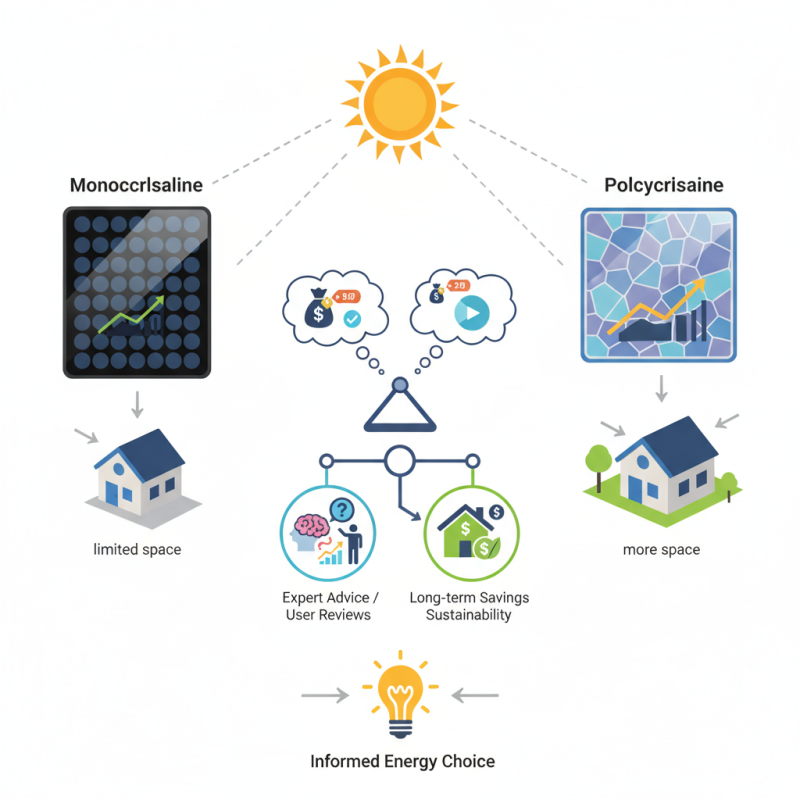
When comparing monocrystalline and polycrystalline solar panels, understanding their distinct features is crucial. Monocrystalline panels are made from a single crystal structure, which leads to higher efficiency—often around 15% to 22%—according to industry reports. These panels perform well in low light conditions and have a longer lifespan, typically lasting over 25 years.
In contrast, polycrystalline panels are made from multiple crystal fragments. Their efficiency ranges from 13% to 16%. While they are generally more affordable, they may occupy more space and require optimal sunlight for peak performance. Research shows that polycrystalline panels tend to have a shorter operational lifespan and are less effective in high-temperature conditions, which can reduce their overall viability in certain environments.
Tips: Consider installation space. If you have limited roofing area, monocrystalline may be more suitable, despite the higher cost. Budget constraints? Polycrystalline could offer a more wallet-friendly option. Lastly, don't overlook local climate conditions when making your choice. Choices should align with your specific needs and environment for optimal results.
When selecting between monocrystalline and polycrystalline solar panels, various factors come into play. Monocrystalline panels are known for their high efficiency and sleek appearance. They perform better in low light and occupy less space. Conversely, polycrystalline panels are generally more affordable. They are made from multiple silicon crystals, which affect their efficiency. This could make them less suitable for smaller rooftops.
Another factor is temperature coefficient. Generally, monocrystalline panels perform better in higher temperatures compared to polycrystalline panels. The basic material used also matters. Monocrystalline is made from pure silicon, while polycrystalline is a mix. This difference could influence longevity and durability. Many users prioritize cost over efficiency but later regret their choice once energy demands exceed expectations.
The installation site plays a crucial role. If you have ample roof space, polycrystalline may suffice. However, those with limited space or specific aesthetic preferences may lean towards monocrystalline. It's essential to think about your long-term energy needs and budget. A well-informed choice can lead to significant savings, while a hasty decision might result in greater expenses later on. Explore every option and weigh the pros and cons carefully.
| Factor | Monocrystalline Panels | Polycrystalline Panels |
|---|---|---|
| Efficiency | 15% - 20% | 13% - 16% |
| Cost | Higher initial cost | Lower initial cost |
| Lifespan | 25 years or more | 20 - 25 years |
| Space Efficiency | More efficient, requires less space | Less efficient, requires more space |
| Performance in Low Light | Better performance | Less effective |
| Temperature Coefficient | Better, performs well in high temperatures | Worse, efficiency drops more in heat |
When comparing monocrystalline and polycrystalline solar panels, efficiency is a crucial aspect. Monocrystalline panels generally offer higher efficiency rates, often around 15-22%. These panels are made from single crystal structures, which allow electrons to flow more freely. This design maximizes energy capture from sunlight. They perform well in low-light conditions, making them ideal for various climates.
In contrast, polycrystalline panels tend to have lower efficiency, usually ranging from 13-16%. Made from multiple crystal structures, they offer a more cost-effective solution but require more space for the same energy output. Their performance declines in high temperatures, making location a critical factor.
Choosing between these options can depend on available space and budget. The decision may not be straightforward, requiring careful consideration of your specific needs.
When considering solar panel options, one crucial factor is cost.
Monocrystalline panels are often more expensive due to their higher efficiency and sleek appearance.
They are made from single-crystal silicon, offering greater energy output per square meter. This means you may need fewer panels compared to polycrystalline options.
However, the upfront investment can be significant.
On the other hand, polycrystalline panels are generally more affordable.
Their production process is simpler, leading to lower costs. These panels are composed of multiple silicon crystals, which can result in slightly reduced efficiency.
If budget constraints are a primary concern, polycrystalline may appear as a more attractive choice.
Keep in mind that lower cost might lead to trade-offs in long-term performance and energy yield.
It’s essential to evaluate your energy needs carefully. High efficiency comes with a price, but it may lead to savings on energy bills over time.
Reflect on your situation, balancing initial costs with potential savings. The right choice depends not just on price but also on your energy goals and available space.
When considering solar panel options, durability and lifespan stand as critical factors.
Monocrystalline panels are renowned for their higher efficiency rates, often reaching over 20%. They are built from a single silicon crystal structure, which enhances their durability.
In contrast, polycrystalline panels exhibit lower efficiency, typically between 15% to 18%. Despite this, they can provide a solid choice for budget-conscious consumers.
Recent studies, including reports from the National Renewable Energy Laboratory, suggest that monocrystalline panels generally offer a lifespan of 25 years or more.
In harsh weather conditions, they tend to outperform polycrystalline panels, which might degrade faster. Environmental factors play a significant role in performance.
For instance, extreme heat can affect the efficiency of polycrystalline panels more drastically than monocrystalline models.
Tip: Assess your local climate when making a decision. If you live in a region with frequent heat waves, opt for monocrystalline panels.
While polycrystalline panels may be less efficient, they still hold advantages. They are often less expensive and have a lower carbon footprint during production.
This makes them a viable option for some homeowners. However, buyers should consider potential degradation of performance over time.
Tip: Look into warranties. A longer warranty often indicates higher confidence in the panel's lifespan and durability.
: Monocrystalline panels are made from a single crystal, while polycrystalline panels consist of multiple fragments.
Monocrystalline panels usually have efficiency ratings between 15% to 22%. Polycrystalline panels range from 13% to 16%.
Monocrystalline panels can last over 25 years. Polycrystalline panels usually have a shorter lifespan.
Yes, monocrystalline panels perform well in low light conditions compared to polycrystalline.
Consider your installation space, budget, and local climate. Each factor can significantly influence your choice.
Polycrystalline panels are generally more affordable. They may appeal if budgeting is a primary concern.
Polycrystalline panels tend to be less effective in high temperatures, which can reduce their performance.
Monocrystalline panels typically require less space due to higher efficiency, making them suitable for limited areas.
Lower cost may lead to reduced efficiency and shorter lifespan, impacting long-term energy yield.
It's essential to balance initial costs with potential savings on energy bills based on your energy needs.
When considering how to choose between monocrystalline and polycrystalline solar panels, it is essential to examine several key factors. The comparison between these two types of panels reveals significant differences in efficiency levels, where monocrystalline panels typically offer higher efficiency due to their single-crystal structure. However, polycrystalline panels present a more cost-effective option, making them appealing for budget-conscious consumers.
In addition to efficiency and cost, durability and lifespan are crucial considerations. Monocrystalline panels generally have a longer lifespan and better performance under high temperatures, while polycrystalline panels can be more susceptible to heat degradation. Ultimately, the choice between these solar panel types depends on individual needs, budget, and specific installation conditions, making it vital to weigh all these factors carefully before making a decision.