Choosing solar panels in 2026 is not simply a contest between efficiency and price. Monocrystalline and polycrystalline panels can both produce dependable electricity when correctly designed and installed. However, their performance may change with roof space, local sunlight, temperature, and household energy use.
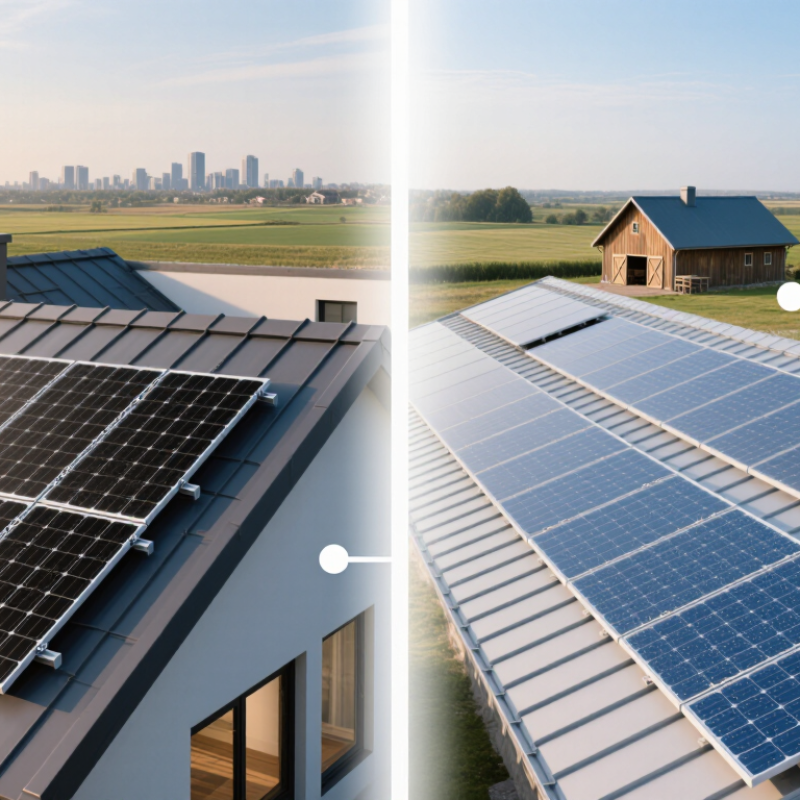
Monocrystalline panels usually provide higher efficiency in a smaller area. Their dark appearance also suits many modern rooftops. Polycrystalline panels often cost less upfront and can work well where roof space is generous. Still, a lower purchase price does not always mean lower lifetime cost. Installation labor, inverter selection, maintenance access, warranties, and expected electricity production deserve equal attention.
No panel wins everywhere.
This guide explains how to choose between monocrystalline and polycrystalline solar panels using practical, evidence-based considerations. It examines efficiency ratings, heat performance, degradation, manufacturing differences, available roof area, and long-term value. Real projects can be less predictable than product brochures suggest. Dust, partial shading, snow, high temperatures, and poor installation may reduce output noticeably. That assumption deserves a second look.
Reliable decisions should come from recent technical specifications, independent performance data, and quotations from qualified installers. Compare the same system size, warranty terms, estimated annual generation, and total installed cost. A premium panel may be worthwhile on a compact urban roof. A more affordable option may suit a larger rural property. The best choice depends on measurable conditions, not marketing language alone.
Solar cells begin with silicon, a semiconductor that responds to sunlight. Photons transfer energy to electrons inside the wafer. This creates electron-hole pairs. Metal contacts then guide the current through an external circuit.
Monocrystalline cells use wafers cut from one continuous silicon crystal. Their ordered structure gives electrons fewer barriers. The International Technology Roadmap for Photovoltaics reported that monocrystalline technology held more than 95% of the global crystalline-silicon market in recent years. Commercial modules commonly reach about 20% to 23% efficiency, according to the Fraunhofer Institute for Solar Energy Systems’ Photovoltaics Report. Mono cells also use space efficiently. That matters on small roofs.
Polycrystalline cells form from several silicon crystals melted together. Their visible blue pattern comes from crystal boundaries. These boundaries can increase recombination, reducing electrical output slightly. Manufacturing can waste less silicon, but the lower efficiency may require more roof area. The difference is real, though not dramatic.
Field inspections often reveal a less tidy truth. Shade, dust, wiring losses, and high temperatures can erase part of the laboratory advantage. The National Renewable Energy Laboratory also notes that efficiency ratings do not equal lifetime energy yield. A careful design should compare local sunlight, roof temperature, available area, and degradation assumptions. Mono usually wins on limited space. Poly can still fit projects where surface area and upfront cost matter more. The choice is not purely technical.
Silicon absorbs photons from sunlight. This releases electrons and creates electron-hole pairs. Metal contacts guide current through an external circuit.
Monocrystalline cells use one continuous silicon crystal. Polycrystalline cells combine several crystals. Their boundaries can slightly increase electrical losses.
Monocrystalline panels usually provide higher efficiency. Commercial modules often reach about 20% to 23%. Newer designs may perform even better.
They produce more power within the same area. This helps on narrow rooftops or crowded urban buildings. Every square metre matters.
Yes, especially when roof space is generous. They may cost less initially. The lower efficiency is real, but usually not dramatic.
No. Heat, dust, shading, wiring losses, and poor airflow reduce output. A clean rating cannot predict every rooftop.
Output commonly falls about 0.30% to 0.40% for each degree above rated conditions. Dark roofs can become surprisingly hot. Airflow helps.
Many panels degrade near 0.5% annually. After 25 years, output might remain around 88% of the original level. Climate and installation change this estimate.
Choose monocrystalline panels when space is limited. Consider polycrystalline panels when area and upfront cost matter more. The cheapest choice can create regret.
Monocrystalline panels usually look deep black and uniform. Polycrystalline panels often show a blue, speckled pattern. Appearance is subjective, and I may underestimate its importance.
In 2026, monocrystalline and polycrystalline solar panels remain two practical choices for residential and commercial energy systems. Both use silicon photovoltaic cells to convert sunlight into electricity, but their manufacturing structures differ. Monocrystalline panels are made from single-crystal silicon, giving them a uniform appearance, higher efficiency, and stronger performance in limited spaces or lower-light conditions. Polycrystalline panels are produced from multiple silicon fragments, making them generally more affordable while offering dependable output and a distinctive blue appearance.
The best option depends on more than efficiency alone. When comparing monocrystalline and polycrystalline panels, consider installation space, local sunlight, energy goals, budget, expected lifespan, durability, and visual preferences. Monocrystalline panels may provide greater power from a smaller area, while polycrystalline panels can be a cost-effective choice when space is sufficient. Understanding how to choose between monocrystalline and polycrystalline solar panels helps homeowners and businesses select a system that balances performance, appearance, long-term value, and practical installation needs.

 ConTech Solar